

FAPESP/BAYLAT – Call for Proposals for Workshops 2025
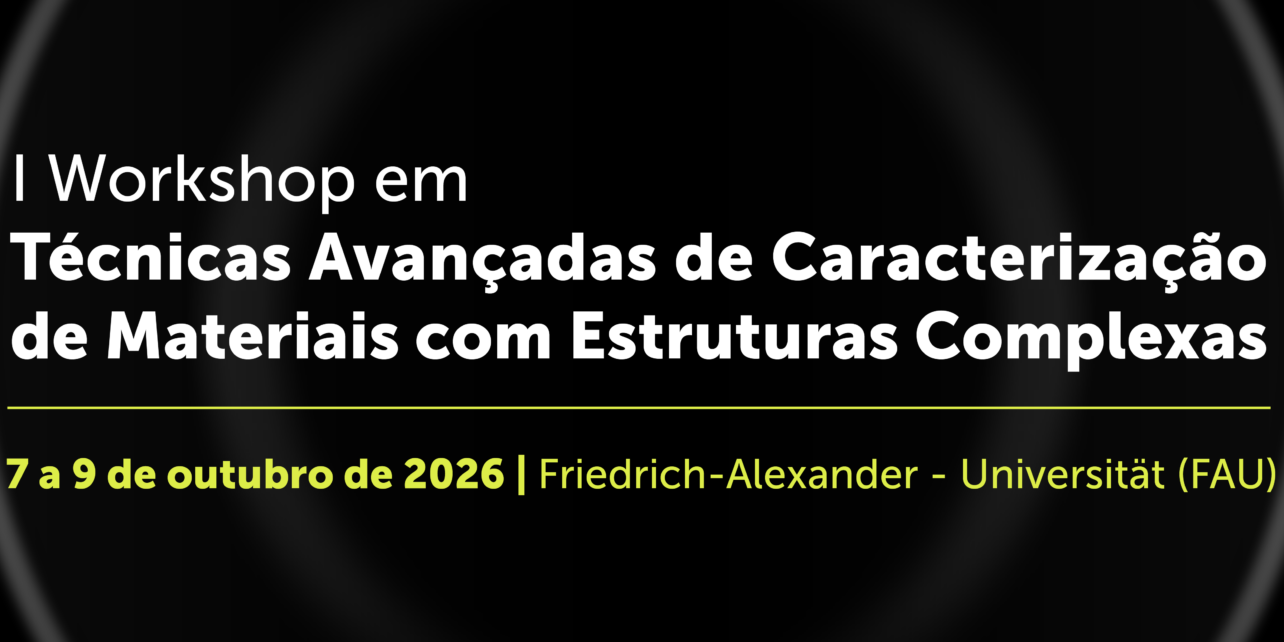
The Brazilian Center for Research in Energy and Materials is now accepting applications from researchers to participate in the I Workshop on Advanced Structural Characterization for Materials with Challenge Structures. Between 12 and 17 researchers from the state of São Paulo will be selected to receive funding from the São Paulo Research Foundation to attend the workshop at Friedrich-Alexander-Universität Erlangen-Nürnberg, Germany.
About the Workshop
Structural characterization of challenging materials requires the acquisition of total scattering data from X-rays, neutron or electron diffraction. The workshop will bring together specialists in these three areas to discuss and foster future scientific collaborations that use total scattering techniques, side by side, as advanced characterization tools for challenging materials, which hold enormous potential to solve scientific problems in important areas such as health, energy, and quantum materials.
With the advances in Transmission Electron Microscopy in the past decade, electron diffraction has emerged as an alternative for structural characterization using total scattering. Detector improvements, mostly in terms of higher sensitivity and counting capabilities, now allow the acquisition of scattering data that can be used to determine the crystallographic atomic arrangement by several methods, such as Automated Electron Diffraction Tomography (ADT) and Electron Pair Distribution Function (ePDF).
At the I Workshop on Advanced Structural Characterization for Materials with Challenging Structures, researchers from all areas of total scattering structural characterization, from both the State of São Paulo (Brazil) and the Free State of Bavaria (Germany), will have the opportunity to present their research, discuss and interact with fellow young researchers to build connections for future collaborations and support their career development.
FAPESP/BAYLAT Support
FAPESP/BAYLAT will support up to 40 researchers to participate in the First Workshop, including 12 to 17 researchers from the State of São Paulo. For these participants, the FAPESP-funded project may cover:
- Round-trip international economy-class airfare between the State of São Paulo and the Free State of Bavaria;
- Per diems;
- Travel insurance.
Note: All expenses will be covered in accordance with FAPESP’s current regulations, subject to the limits established in the Call for Proposals (https://fapesp.br/17532/fapespbaylat-call-ls-for-workshops-2025) and the project’s Grant Agreement (Termo de Outorga).
Application Requirements
All participants must be early-career researchers from research institutions in the State of São Paulo. Participants affiliated with institutions in other Brazilian States are not eligible to participate using FAPESP funding. The eligibility criteria are:
- Early-career researchers must have obtained their PhD no more than 10 years prior to the start date of the workshop (October 2026).
- PhD students must have their thesis defense scheduled within 12 months after the start of the first workshop. These students must provide documentation from their institution or advisor confirming that they are in the final phase of their doctoral studies;
- Participants must have sufficient proficiency in English to actively participate in the Workshop.
At the time of application, applicants must:
- Submit a letter of interest in the Workshop, in English, justifying why their research area matches advanced structural characterization for materials with challenging structures;
- Provide a link to their updated Lattes curriculum.
Evaluation Criteria
Applications will be reviewed by the mentors João B. Souza Jr. and Ibeth Cristina C. Hernandez, and by the Coordinator Edson Roberto Leite, considering:
- Coherence with the application requirements, including PhD obtained less than 10 years from October 2026 and, for PhD students, thesis defense scheduled within 12 months after the start of the first workshop;
- Substantive alignment with the Workshop proposal from both sides, either in advanced structural characterization or in research areas related to materials with challenging structures such as nanoparticles, high-entropy alloys, clusters and amorphous materials. This will be analyzed based on the statement letter and the Lattes CV;
- At least two-thirds of the participants must be affiliated with institutions other than CNPEM. Participation from other universities and research centers is therefore encouraged;
- The greatest possible gender balance will be applied based on the number of applicants meeting the criteria mentioned above;
- The selection process will promote diversity and ensure that no candidate is excluded from participating in the workshops on the basis of ethnicity, gender, religious beliefs, sexual orientation or disability.
Schedule
Program
General Information
Venue Friedrich-Alexander-Universität (FAU) Erlangen-Nürnberg, Erlangen, Germany
Date October 7 to 9, 2026
Support
São Paulo Research Foundation (FAPESP)
Bavarian Academic Center for Latin America (BAYLAT)
Friedrich-Alexander-Universität (FAU)
Brazilian Center for Research in Energy and Materials (CNPEM)
Organizing Committee
Prof. Dr. Edson R. Leite – Coordinator – São Paulo
Prof. Dr. Reinhard Neder – Coordinator – Bavaria
Dr. João B. Souza Jr. – Mentor
Prof. Dr. Marein Rahn – Mentor
Dr. Ibeth Cristina C. Hernandez – Mentor
Prof. Dr. Anatoliy Senyshyn – Mentor
About LNNano
The Brazilian Nanotechnology National Laboratory (LNNano) works in research and development at the nano scale using sophisticated infrastructure and highly specialized teams that can search for answers to scientific challenges and leverage technology solutions. Its open facilities comprise a center that is unrivaled in Brazil and include electron and atomic force microscopy, as well as clean rooms and laboratory spaces that allow activities ranging from materials synthesis and characterization to device manufacturing. Scientific research at LNNano covers strategic topics where nanoscience and nanotechnology can help solve problems facing the country, in areas like renewable energy, materials for sustainability, health and quantum devices. LNNano is part of the Brazilian Center for Research in Energy and Materials (CNPEM) in Campinas, São Paulo, a private, non-profit organization overseen by the Ministry of Science, Technology and Innovation (MCTI).
About CNPEM
The Brazilian Center for Research in Energy and Materials (CNPEM) is home to a state-of-the-art, multi-user and multidisciplinary scientific environment and works on different fronts within the Brazilian National System for Science, Technology and Innovation. A social organization overseen by the Ministry of Science, Technology and Innovation (MCTI), with the involvement of the Ministry of Education and the Ministry of Health, CNPEM is driven by research that impacts the areas of health, energy, renewable materials, and sustainability. It is responsible for Sirius, the largest assembly of scientific equipment constructed in the country, and is currently constructing Project Orion, a laboratory complex for advanced pathogen research. Highly specialized science and engineering teams, sophisticated infrastructure open to the scientific community, strategic lines of investigation, innovative projects involving the productive sector, and training for researchers and students are the pillars of this institution that is unique in Brazil and able to serve as a bridge between knowledge and innovation. CNPEM's research and development activities are carried out through its four National Laboratories: Synchrotron Light (LNLS), Biosciences (LNBio), Nanotechnology (LNNano), Biorenewables (LNBR), as well as its Technology Unit (DAT) and the Ilum School of Science — an undergraduate program in Science and Technology.