

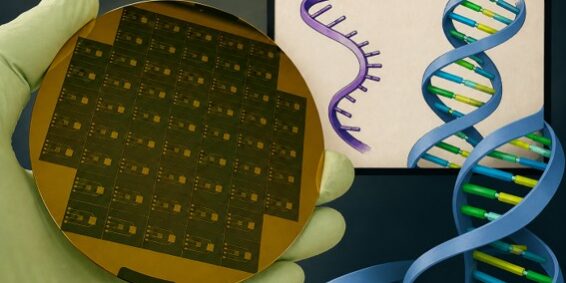
New technology combines graphene, molecular engineering, and artificial intelligence to expand and facilitate the detection of illnesses such as cancer.

Researchers at CNPEM (Brazilian Center for Research in Energy and Materials) have developed an innovative technology that could transform how we monitor diseases. They created a microsensor capable of detecting disease markers in the body with high sensitivity. This innovation paves the way for complex tests to be performed quickly and affordably in the future.
The focus of the research is microRNAs. These are small molecules in the human body that serve as “warning signs” that something is wrong, appearing in cases of cancer and neurological diseases. The discovery of these molecules earned the 2024 Nobel Prize in Physiology or Medicine for American biologists Victor Ambros and Gary Ruvkun.
CNPEM scientists combined different technologies in their research. They joined graphene—an extremely thin, strong material that conducts electricity perfectly—with DNA probes, which act as receptors to capture target molecules. The developed electronic chips function as specialized transistors that signal when a receptor captures its target. Artificial Intelligence was used as the “brain” to analyze the results.
The chip’s sensitivity allows it to detect the molecule even at extremely low concentrations—equivalent to locating a single drop of water in a volume comparable to several Olympic-sized swimming pools.
The device has already demonstrated its functionality in the laboratory, successfully detecting and differentiating three highly similar microRNAs with high sensitivity and speed.
The work demonstrated proof of concept and the technology’s overall robustness. The knowledge generated could eventually lead to corporate partnerships, patent applications, technology transfer, or even commercial product development. However, commercialization depends on several stages, including clinical validation, regulatory approval, and manufacturing scaling.
Artificial Intelligence
Identifying these molecules is challenging because many of them are nearly identical. That is where Artificial Intelligence comes in. When the chip captures the disease signal, AI analyzes the device’s response and identifies the exact type of microRNA present. In tests, the device distinguished three virtually identical molecules in artificial urine samples.
Currently, conducting DNA and RNA tests (such as the well-known RT-PCR) requires patients to visit a diagnostic laboratory and wait days for results through a process that relies on massive, expensive equipment.
CNPEM’s new device opens up the possibility of creating pocket-sized, portable tests. The goal is to allow doctors to use this chip to deliver a diagnosis within minutes right in their office or even at the patient’s home. It could help detect cancers such as stomach, colorectal, breast, and prostate cancer.
It also shows potential for applications in cardiovascular and neurological diseases, rheumatoid arthritis, and diabetes, for which microRNA biomarkers are already being studied. Depending on the biomarker used, the device can be adapted to target different diseases.
The microsensor was fabricated in CNPEM’s micro and nanofabrication cleanrooms using standard processes from the electronic chip manufacturing industry.
The study was conducted within the Center for Research in Molecular Engineering for Advanced Materials (CEPID-CEMol), funded by FAPESP (São Paulo Research Foundation). The findings were published in the journal Small and represent a step forward in developing portable technologies for molecular biomarker detection. The full article is available at: https://onlinelibrary.wiley.com/doi/full/10.1002/smll.202512199
About CNPEM
The Brazilian Center for Research in Energy and Materials (CNPEM) is home to a state-of-the-art, multi-user and multidisciplinary scientific environment and works on different fronts within the Brazilian National System for Science, Technology and Innovation. A social organization overseen by the Ministry of Science, Technology and Innovation (MCTI), with the involvement of the Ministry of Education and the Ministry of Health, CNPEM is driven by research that impacts the areas of health, energy, renewable materials, and sustainability. It is responsible for Sirius, the largest assembly of scientific equipment constructed in the country, and is currently constructing Project Orion, a laboratory complex for advanced pathogen research. Highly specialized science and engineering teams, sophisticated infrastructure open to the scientific community, strategic lines of investigation, innovative projects involving the productive sector, and training for researchers and students are the pillars of this institution that is unique in Brazil and able to serve as a bridge between knowledge and innovation. CNPEM's research and development activities are carried out through its four National Laboratories: Synchrotron Light (LNLS), Biosciences (LNBio), Nanotechnology (LNNano), Biorenewables (LNBR), as well as its Technology Unit (DAT) and the Ilum School of Science — an undergraduate program in Science and Technology.