

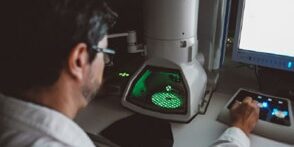
Proposals may be submitted until October 4, with project execution beginning in February 2027.
The Brazilian Center for Research in Energy and Materials (CNPEM)will accept proposals, from September 1 to October 4, 2026, Researchers from around the country can submit research proposals through the SAU online system and select the facility most relevant to their projects.
The proposals will be evaluated by the technical and scientific committees, and selected projects will be carried out from February 2027 onward. The facilities that are available for research use are:
- Scanning Electron and Dual Beam Microscopy (SEM-FIB) Laboratory
- Transmission Electron Microscopy (TEM) Laboratory
- Cryogenic Transmission Electron Microscopy (CRYO-EM) Laboratory
Submitted proposals will be evaluated by technical and scientific committees, and the execution period will begin in February 2027. The facilities accepting proposals are:
- Scanning Electron and Dual Beam Microscopy Laboratory (SEM-FIB)
- Transmission Electron Microscopy Laboratory (TEM)
- Cryogenic Electron Microscopy Laboratory (CRYO-EM)
Scanning Electron and Dual Beam Microscopy Laboratory (SEM-FIB)
The Scanning Electron and Dual Beam Microscopy Laboratory (SEM-FIB) has infrastructure for sample preparation, high-resolution imaging, chemical analysis by EDS, crystallographic analysis by EBSD/TKD, and advanced experiments involving in situ heating and deformation. In addition, the dual-beam microscopes enable the preparation of thin samples for TEM, cross-sectional analysis, and Slice and View tomography.
Transmission Electron Microscopy Laboratory (TEM)
The Transmission Electron Microscopy Laboratory enables the characterization of hard materials, such as metals, alloys, ceramics, and semiconductors, in terms of size, morphology, crystal and electronic structure, and chemical composition, with atomic resolution capabilities. The facility is equipped with transmission electron microscopes featuring cameras for image acquisition and electron diffraction, as well as spectrometers for compositional analyses (EELS/EDS).
Cryogenic Electron Microscopy Laboratory (CRYO-EM)
The state-of-the-art transmission electron cryomicroscopes available at CNPEM, together with its sample preparation laboratories, enable the characterization of the ultrastructure of cells and biological macromolecules. The freezing and vitrification of samples makes it possible to obtain high-resolution structural information on biomolecules.
Soft materials, such as self-assembled systems, emulsions, and nanocomposites, can also be analyzed using conventional (TEM) or cryogenic (cryo-TEM) modes. The open-access facilities have equipment and specialists capable of meeting the sample preparation requirements of a wide range of materials for imaging in their native state.
Selection Process
Proposal evaluation is conducted by External and Internal Committees, which consider technical feasibility, scientific merit, and sample safety. Further information about the process is available on the LNNano proposal submission page.
When submitting a proposal, applicants must select the appropriate External Committee:
- TEM-C1 / SEM-FIB-C1: Metals, Ceramics, and Minerals;
- CRYO-EM-C2: Cells and Biological Structures;
- CRYO-EM-C3 / SEM-FIB-C3: Polymers and Colloids.
Travel Support for Researchers from Outside São Paulo State
Researchers from institutions located outside the state of São Paulo whose proposals are approved may apply for travel assistance to cover transportation, meals (lunch), and accommodation expenses. See the details on the CNPEM User Office financial assistance page.
Important Dates
- Submission period: September 1 to October 4, 2026;
- Results notification: First half of December 2026;
- Start of proposal execution: February 2027.
About CNPEM
The Brazilian Center for Research in Energy and Materials (CNPEM) is home to a state-of-the-art, multi-user and multidisciplinary scientific environment and works on different fronts within the Brazilian National System for Science, Technology and Innovation. A social organization overseen by the Ministry of Science, Technology and Innovation (MCTI), with the involvement of the Ministry of Education and the Ministry of Health, CNPEM is driven by research that impacts the areas of health, energy, renewable materials, and sustainability. It is responsible for Sirius, the largest assembly of scientific equipment constructed in the country, and is currently constructing Project Orion, a laboratory complex for advanced pathogen research. Highly specialized science and engineering teams, sophisticated infrastructure open to the scientific community, strategic lines of investigation, innovative projects involving the productive sector, and training for researchers and students are the pillars of this institution that is unique in Brazil and able to serve as a bridge between knowledge and innovation. CNPEM's research and development activities are carried out through its four National Laboratories: Synchrotron Light (LNLS), Biosciences (LNBio), Nanotechnology (LNNano), Biorenewables (LNBR), as well as its Technology Unit (DAT) and the Ilum School of Science — an undergraduate program in Science and Technology.
About LNNano
The Brazilian Nanotechnology National Laboratory (LNNano) works in research and development at the nano scale using sophisticated infrastructure and highly specialized teams that can search for answers to scientific challenges and leverage technology solutions. Its open facilities comprise a center that is unrivaled in Brazil and include electron and atomic force microscopy, as well as clean rooms and laboratory spaces that allow activities ranging from materials synthesis and characterization to device manufacturing. Scientific research at LNNano covers strategic topics where nanoscience and nanotechnology can help solve problems facing the country, in areas like renewable energy, materials for sustainability, health and quantum devices. LNNano is part of the Brazilian Center for Research in Energy and Materials (CNPEM) in Campinas, São Paulo, a private, non-profit organization overseen by the Ministry of Science, Technology and Innovation (MCTI).