

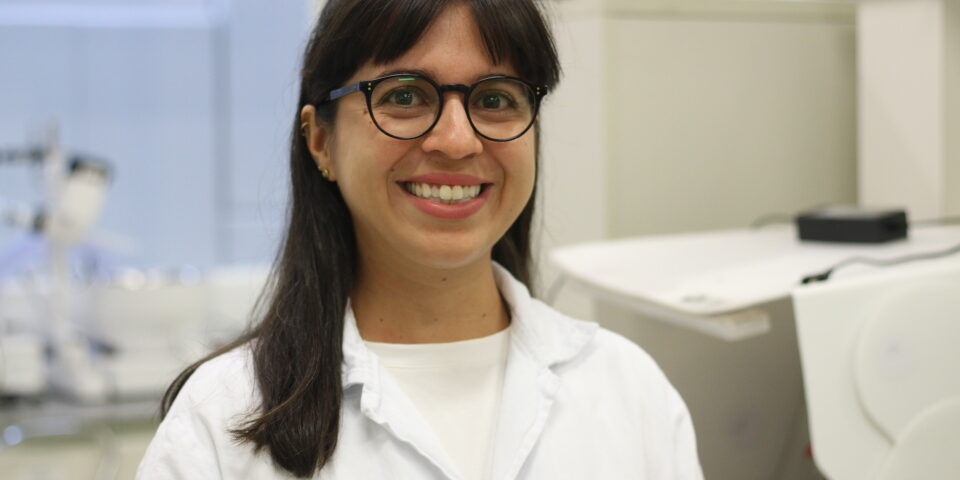
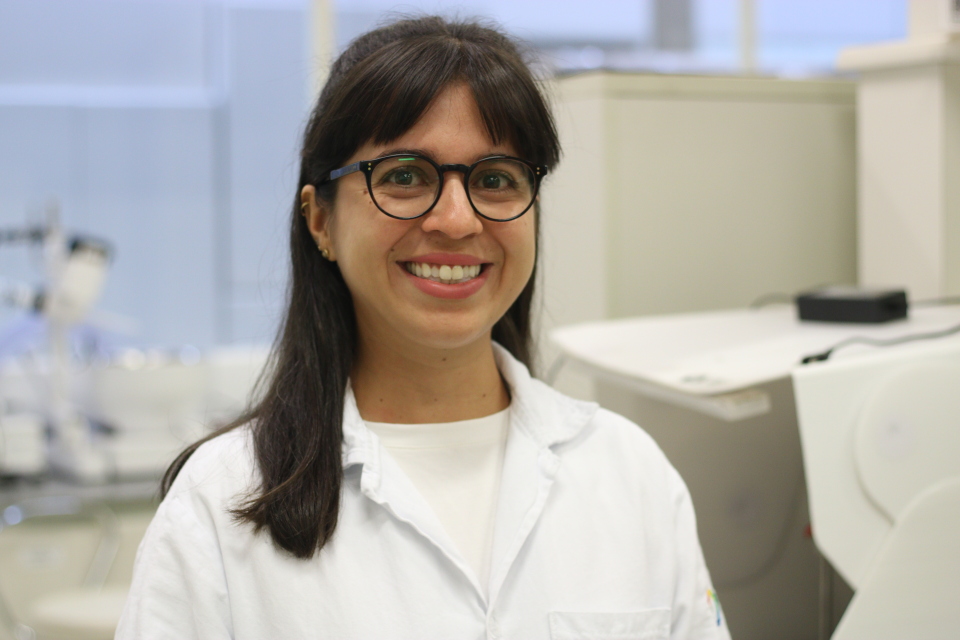
Elisa Silva Ferreira recognized for her work as a tutor in a program that encourages female participation in science.
The researcher Elisa Silva Ferreira, of the Brazilian Center for Research in Energy and Materials (CNPEM), was one of the winners of the CAPES Future Scientists Award. This initiative recognizes students, teachers and tutors who stood out in the 2024 edition of the Future Scientists Program, which promotes gender equity by encouraging women to participate in STEM fields (science, technology, engineering and math). The awards ceremony, hosted by CAPES as an online event, was held on November 5.
 At the beginning of 2024, Ferreira tutored a group composed of two students and one public-school teacher, offering guidance about a project on the use of nanofibrils derived from sugarcane bagasse as a renewable and ecological alternative to aluminum-based flocculants for treating contaminated water.
Over the span of a month, the group conducted activities at the Brazilian Nanotechnology National Laboratory (LNNano) at CNPEM that involved preparing samples, microscopy and chemical analyses. This experience provided an immersion in the research environment and scientific experimentation.
“With the assays conducted by our Future Scientists team, we were able to show that nanocellulose removes contaminants more efficiently than conventional flocculants like aluminum sulfate, which is often used in water treatment plants. These findings indicate nanocellulose’s potential as an ecological alternative for water treatment,” said Ferreira.
 As part of the award, she and the other winners will receive support from CAPES to participate in a national scientific congress related to the area of the research project. The CAPES Future Scientists Award was founded in 2024 and recognizes the best projects developed during each edition of the program.
“Receiving the CAPES Future Scientists Award was a valuable recognition of our dedication in encouraging women to participate in science. My team and I are very grateful for this award, which encourages us to continue promoting immersion in the world of science for high school students and teachers,” added Ferreira.
Future Scientists Program
The Future Scientists Program was created in 2012 by the Northeast Center for Strategic Technology (CETENE) in Pernambuco, and expanded nationally from 2022 onward to involve research institutions across the country. The objective of the program is to encourage interest in STEM among girls and female teachers in public high schools.
CNPEM has participated since 2022, and with this new award celebrates the second straight recognition of projects carried out in its facilities.
About LNNano
The Brazilian Nanotechnology National Laboratory (LNNano) works in research and development at the nano scale using sophisticated infrastructure and highly specialized teams that can search for answers to scientific challenges and leverage technology solutions. Its open facilities comprise a center that is unrivaled in Brazil and include electron and atomic force microscopy, as well as clean rooms and laboratory spaces that allow activities ranging from materials synthesis and characterization to device manufacturing. Scientific research at LNNano covers strategic topics where nanoscience and nanotechnology can help solve problems facing the country, in areas like renewable energy, materials for sustainability, health and quantum devices. LNNano is part of the Brazilian Center for Research in Energy and Materials (CNPEM) in Campinas, São Paulo, a private, non-profit organization overseen by the Ministry of Science, Technology and Innovation (MCTI).
About CNPEM
The Brazilian Center for Research in Energy and Materials (CNPEM) houses a cutting-edge, multi-user and multidisciplinary scientific environment, with actions in different areas of the National Science, Technology and Innovation System. A Social Organization supervised by the Ministry of Science, Technology and Innovation (MCTI), CNPEM is driven by research that impacts the areas of health, energy, renewable materials and sustainability. Responsible for Sirius, the largest scientific equipment ever built in the country, CNPEM currently develops the Orion project, a laboratory complex for advanced research on pathogens. Highly specialized science and engineering teams, sophisticated infrastructures open to the scientific community, strategic lines of investigation, innovative projects with the productive sector and training of researchers and students constitute the pillars of this unique center in the country, capable of acting as a bridge between knowledge and innovation. The CNPEM is responsible for the operation of the Brazilian Synchrotron Light Laboratory (LNLS), the Brazilian Biosciences National Laboratory (LNBio), the Brazilian Nanotechnology National Laboratory (LNNano) and the Brazilian Biorenewables National Laboratory (LNBR), as well as for the Ilum School of Science, a bachelor’s degree course in Science and Technology, supported by the Ministry of Education (MEC). https://cnpem.br/